
Districts · Vendor Alignment
Every renewal lands on a different desk in a different month.
You never see the whole stack at once.
Vendor Alignment moves your contract renewals onto the date you choose - so procurement gets one document, not a year of reminders.
The situation
Months a district's renewals arrive across
12
Without alignment, every one on its own timer
Date the whole stack can be reviewed on
1
Once aligned, procurement decides in a single window
Vendors in a typical district contract book
30+
[Placeholder - stat to research before publish]
How we work
Who's this for?
Districts and charter networks that already know they own too much software, and are tired of finding out one contract at a time. Vendor Alignment is what makes an audit's findings actionable - it moves the renewal dates onto a schedule the district can actually plan around, so the decisions from a DPA review or an EdTech audit have a place to land.
Alignment doesn't judge the stack. It puts it on one desk on one day, so somebody can.
Pressure point 01
Every renewal is a decision made alone
When a contract lands outside of traditional buying windows, it can easily slip through the cracks, regardless of if the product is serving district needs.
Pressure point 02
Auto-renewals fire before anyone checks
Auto-renewal windows close before anyone had time to look at usage, and by the time the invoice arrives the district is committed for another year.
Pressure point 03
Nobody is watching mid-year
Once school starts, tracking renewal windows falls off every plate. A contract sits quietly until its date lands, and the district ends up making the call under time pressure.
In plain terms
Vendor Alignment is a re-scheduling engagement. We work each vendor rep, one at a time, to move renewals onto the date - or the dates - the district chooses.
The other three district services ask whether you should keep something. This one only answers when the question comes up.
01
For the business office
Every contract renews on a date the district picked, so the annual review happens in one summer window and the whole stack shows up in one report to the board.
02
For IT and academics
The keep-or-cut conversations happen while every teacher and administrator is still in the same room, before school starts and before the vendor's window closes.
How the dates line up
One anchor date, or a few. Whichever fits your year.
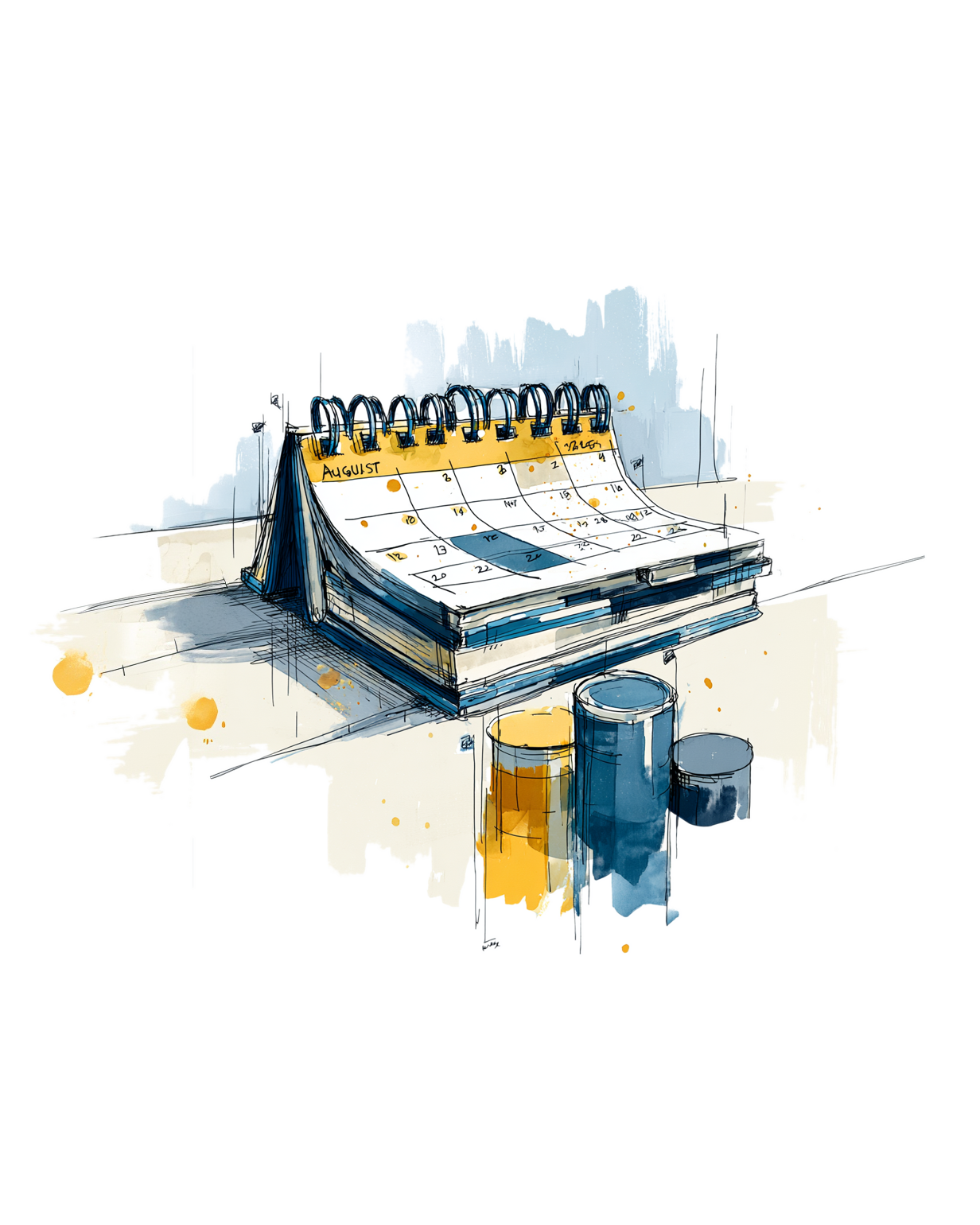
Most districts pick August 1 so the review lands on an existing admin day. Split budgeting cycles get more than one anchor - we work to whichever calendar the district actually runs on.
01
You choose the date, or dates
One anchor is simplest. Two or three is fine if your budget cycle is split. We don't push a date - we work to yours.
02
You sign the authorization letter
A short delegation document that tells each vendor rep Loop + Ledger has permission to renegotiate contract dates on your behalf. That's what unblocks every conversation that follows.
03
We work each vendor, one at a time
Every rep gets the letter, a proposed new date, and a call. Most reps agree. Some don't, and that's the next step.
04
Holdouts come back to you with options
If a vendor won't shift same-year - say we contact them in May and they'll only agree to next August - you decide. Accept the longer contract, or hold the misaligned date. Where possible we push for same-year to avoid extending contracts.
05
Procurement gets one calendar
Every vendor, every new renewal date, and the paper trail on how it moved. One document, ready for the district's records and the next admin session.
The engagement
Four phases, paced to your renewal windows.
Sized on the number of vendors in the book, not on a standard package.
01
Scope
Kickoff, target alignment date or dates, and the source of the vendor list. If you've already run a penetration test, DPA review, or EdTech audit with us, the list is already yours - we work from that. As a standalone, the district provides the vendor list and known sales reps for each; we don't run discovery in standalone mode.
02
Authorize
The district signs the delegation letter that lets us renegotiate contract dates with each vendor on the district's behalf. The letter itself is one of your deliverables - the district keeps it as its record of what authority was extended.
03
Outreach & Negotiation
One vendor at a time. Every rep gets the letter, a proposed new renewal date, and a call. We log the response for every contract: agreed to the new date, agreed on a different date, or held out.
04
Reconcile & Hand Off
Holdouts come back to the district with the vendor's counter-offer. You decide accept or hold. We apply those decisions to the calendar and hand off the aligned renewal schedule to procurement.
What you receive
Renewal cycles that you can plan around.
Deliverable 01
Aligned Renewal Calendar
Every vendor, the new renewal date, contract length, and where the contract sits in relation to your chosen anchor. Ready for procurement, ready for the board.
Deliverable 02
Vendor Response Log
Which vendors agreed to the new date, which required a longer contract, which held out - and the correspondence behind each outcome. What you'd want if the negotiation ever needed to be re-opened.
Deliverable 03
Authorization Letter
The delegation document sent to each vendor rep, on the district's letterhead, kept in the district's records as evidence of what authority was extended and when.
Book a call
Start the Conversation →Get every renewal on the date you actually want.
Tell us what you're running and when the next contracts land. You'll leave the call knowing whether alignment is worth doing before your next admin cycle.
See clearly.
Act strategically.
Protect what matters.
Questions we get
What districts ask before they start.
Do we have to align every vendor to the same date?
No. Most districts pick one anchor - typically August 1, so it lands on an existing admin day - but a split budgeting cycle can have two or three. The rule is that the dates are chosen, not scattered.
Can we run this without doing an EdTech audit or DPA review first?
Yes. As a standalone, you provide the vendor list with the sales rep for each contract, and we work from that. We don't run tool discovery in standalone mode - so the service works best after an audit, when the inventory is already yours.
What if a vendor won't move the renewal to our chosen date?
Some don't. If we contact a vendor in May and they'll only agree to August of the following year, that extends the contract by fourteen months and we bring it back to the district to decide. Where we can, we push for same-year alignment to avoid the longer contract.
Do you evaluate the vendors, or just move the dates?
We only move the dates. The evaluation is the EdTech audit and the DPA review - if you want the keep-or-cut recommendation, those are where it lives. Vendor Alignment makes their findings actionable on a calendar the district can plan around.
How is pricing structured?
Priced per vendor with a minimum engagement, and a negotiation fee for vendors that require escalation - some reps take one email, others take a month of back-and-forth. Quoted in writing after the scoping conversation, so the number doesn't move underneath you.
Who does the work?
Claire Smizer-Muldoon runs the engagement end to end - the scoping call, the vendor outreach, every negotiation, and the hand-off to procurement. One point of contact for the district and for every vendor rep.
Also for districts